

As students, a common piece of advice we are told is to follow our dreams. We are told to take advantage of all the opportunities that come our way, to create opportunities we wish existed, to seize the day, to make our college experiences count, to use our time wisely… And for many of us, the natural follow up question is… How? How do we make the most of our opportunities, and perhaps even, how do we find them in the first place?
Dr. Becky Byler ('13) has concrete insight regarding these questions. Dr. Byler grew up practicing the philosophy of “taking the long cut,” a mindset that she says emphasizes “leaning creatively into liminal space” and not going through life finding the quickest, easiest path towards a goal. She values enriching her portfolio of life experiences as opposed to taking shortcuts, and above all, being intentional with how she spends her time.
As a B.S. Biomedical Engineering major within the Honors Program, Dr. Byler ensured she stayed busy at Georgia Tech. During her undergrad, she additionally attained two minors (Chemistry and Women, Science, and Technology) and a certificate in Spanish, with additional degree designations via GT’s International Plan and Research Option. As part of her International Plan curricula, Dr. Byler completed academic semesters at Spain’s Universitat Politècnica de Valéncia (UPV) and Mexico’s Universidad Autónoma de México (UNAM) and worked abroad in Honduras, Mexico, Ecuador, and Peru. In her last year at GT, Dr. Byler was also a Teaching Assistant for four Biomedical Engineering core courses.
Dr. Byler devoted immense effort into research initiatives, working in in the Parker H. Petit Institute for Bioengineering and Bioscience at Georgia Tech and at Emory’s Rollins School of Public Health. Dr. Byler shared that she received some initial hesitancy as an engineer who wanted to work in the public health field, but it was precisely this “research long cut" that had the biggest directional impact on her future profession: “I must have emailed about 50 labs at Emory my freshman year until I found someone willing to take a chance on me and let me first explore what I now call ‘humanitarian bioengineering’. That first year in my two labs, I was a sponge learning all that I could on the [public health] lab’s various projects... mosquito collection & identification, mathematical modeling, and even trapping wild squirrels in Grant Park until I gained enough knowledge to start formulating my own research ideas at the intersection of engineering and infectious disease back at Georgia Tech... like designing a biodegradable device for releasing genetically modified mosquitos to combat Dengue and developing a better microfluidic diagnostic platform for malaria after I quantified differences in infected cell stiffness.”
In addition to research, Dr. Byler explored Atlanta-based internships and global projects. Dr. Byler found her home first semester with Engineers Without Borders, ultimately holding leadership positions on well drilling and water distribution projects in Honduras and Cameroon, and she volunteered monthly with Engineering World Health to repair broken medical equipment for use in low- and middle-income countries. Dr. Byler also worked at The Carter Center as a development volunteer to improve donor recruitment and funding management for global initiatives including the guinea worm eradication program. In her final year at GT, Dr. Byler’s all-female capstone team designed a sit-squat toilet for refugees (SafiChoo) that won First Prize and People’s Choice Award in the 2014 Inventure Prize competition. To help her team with translation, Dr. Byler interrupted her gap year of hiking across South America to fly to Kenya to build the toilet prototypes they piloted in the Kakuma Refugee Camp.
Dr. Byler praises Georgia Tech for building her perspective on the interconnection between STEM and policy and for nurturing her governing framework of leading interdisciplinary efforts in critical spaces for social impact. Dr. Byler positively reflected on her intentionality in weaving and expanding her diverse experiences at Georgia Tech into focused, sustainable development opportunities and science diplomacy initiatives that have continued past graduation, sharing, “my policy work inherently informs the research that I do, just like my research informs the policy work that I do. I think it's kind of hard to have one without the other because my science and my research are truly grounded in community and this notion of intertwined progress and service."
Dr. Byler emphasized that opportunities arise in every single situation, even the events or experiences you might perceive as being uneventful or unrelated. It is absolutely crucial to remember that in those instances, “just placing yourself in the vicinity of people and not being afraid to walk up and have conversations, even if you don't necessarily know where they're going to lead or even if they're going to lead to anything tangible, is a mindset worth strengthening.”
She connected this idea with personal experience presenting her research at a dermatology conference early in her graduate training: Dr. Byler didn't know anyone at this conference. Her poster was hung in the back corner of the exhibition hall. The conference was moving slowly, so Dr. Byler started a conversation with the person whose poster was across from hers, comparing their research projects, finding connections, and chatting about their niche interests. This initial, casual connection sparked a longer conversation and, eventually, a rich professional collaboration that added a new dimension to her translational research. Dr. Byler adds, “it's now turned into about four or five different publications and has been this really, really fascinating, interesting intersection of bringing in patient perspectives and patient-centered outcomes at all stages of biotech R&D.”
So for us students at GT, what does this mean?
Opportunities are not bound to jump out at us in the form of an email invite or a flyer taped to our dorm doors. Creating avenues for ourselves and finding ways to make the most out of situations we might have thought would not end as positively as we hoped. Creating chances to get involved and find success is about being intentional about how we use our voice, our time, and our ability to “find and connect with others in a genuine way,” Dr. Byler asserts. Every conversation or new connection isn’t bound to metamorphosize into a full-blown research project, but Dr. Byler emphasizes that students should “make it a habit to constantly seek new knowledge” and “take a path for the sake of the path itself” as she believes it is an almost foolproof way to someday land an opportunity, interest, passion, or dream that you never expected to exist. “At the very least, you’ll definitely make a new friend or have a good story to tell."
Dr. Byler was one of the recipients (not once, but seven times!) of the HP Challenge Fund, an avenue that still exists for JMHP students today. The Challenge Fund is a long-standing Honors Program initiative that provides students a $500 grant meant to encourage students to consider service-oriented experiences, motivate attendance to academic or leadership conferences, and support innovative projects of students’ own design. Some of Dr. Byler’s long cut adventures sponsored by the Challenge Fund include getting her Wilderness First Responder (WFR) certification as her final project for her HP Bioethics Seminar, an Engineers Without Borders trip to Cameroon for a solar-powered well project, a science & technology policy trip to Washington DC, a biotechnology industry trip to Puerto Rico and hiking in El Yunque national forest, and attending the CDC’s first ever engineering in public health symposium. Additionally, the Challenge Fund supported gear rental for Dr. Byler’s fall break section hike of Appalachian Trail and travel resources to give an oral presentation on her thesis work at the Biomedical Engineering Society’s annual conference. Making the most of moments and finding unique ways to combine and dive even deeper into our personal interests is a takeaway we can gain here. As Dr. Byler reflects, “Sometimes you only need a little financial spark to turn a thought from ember to fire! The HP Challenge Fund was pivotal during the many inflection points I had along my journey at GT.”
One core piece of advice Dr. Byler emphasized was to know your why. What exactly drives your decision to get up in the morning, to attend the event, to take the class, to do the research? Beyond the ‘I have been doing this forever!’ reason, ensure that you have a deeper, more meaningful rationale. She discussed how students might dive deep into a subject or niche area and stick with it long-term simply because they find it difficult to overcome inertia and make a shift - even if a shift is exactly what that student needs to stay inspired and committed to their work.
When you need to make a shift, however, Dr. Byler shares that it is critical to be grounded in your core beliefs and your core values. These ideas, philosophies, and ways of life create a personal framework and unique vision that you can come back to if you find that the new path you decide to take, or perhaps a career shift, does not end up fitting. For Dr. Byler, these core values are progress and service. She suggests reflecting on and generating your own list of 3-5 core values, not only to find your next step, but also to ensure you “self-consistently navigate unexpected situations and outcomes.” Dr. Byler expands: “if you're grounded in who you are as a person, in your own value set, I think that risk will always be worth it. Jumping into those liminal spaces will always be worth it. Because without risk, you're just going to be sitting in your comfort zone.”
When students get trapped in this whirlwind, it’s crucial that they self-reflect. Dr. Byler explains, "sometimes we don't know that paths exist to us outside of what we interact with…if you don't take the time to continually check in with yourself, then I really think you’re doing yourself a disservice. Some years there are more doors that I close than I leave propped open after exploring, but every long cut – whether I stay on that path or not – teaches me something about myself."
GT and Honors Program alum Dr. Becky Byler is a true inspiration. She motivates us to create our own path, urges us not to take shortcuts and instead focus on gaining valuable experiences, and inspires us to be mindful of “why” we’re taking part in the activities we chose to invest time.
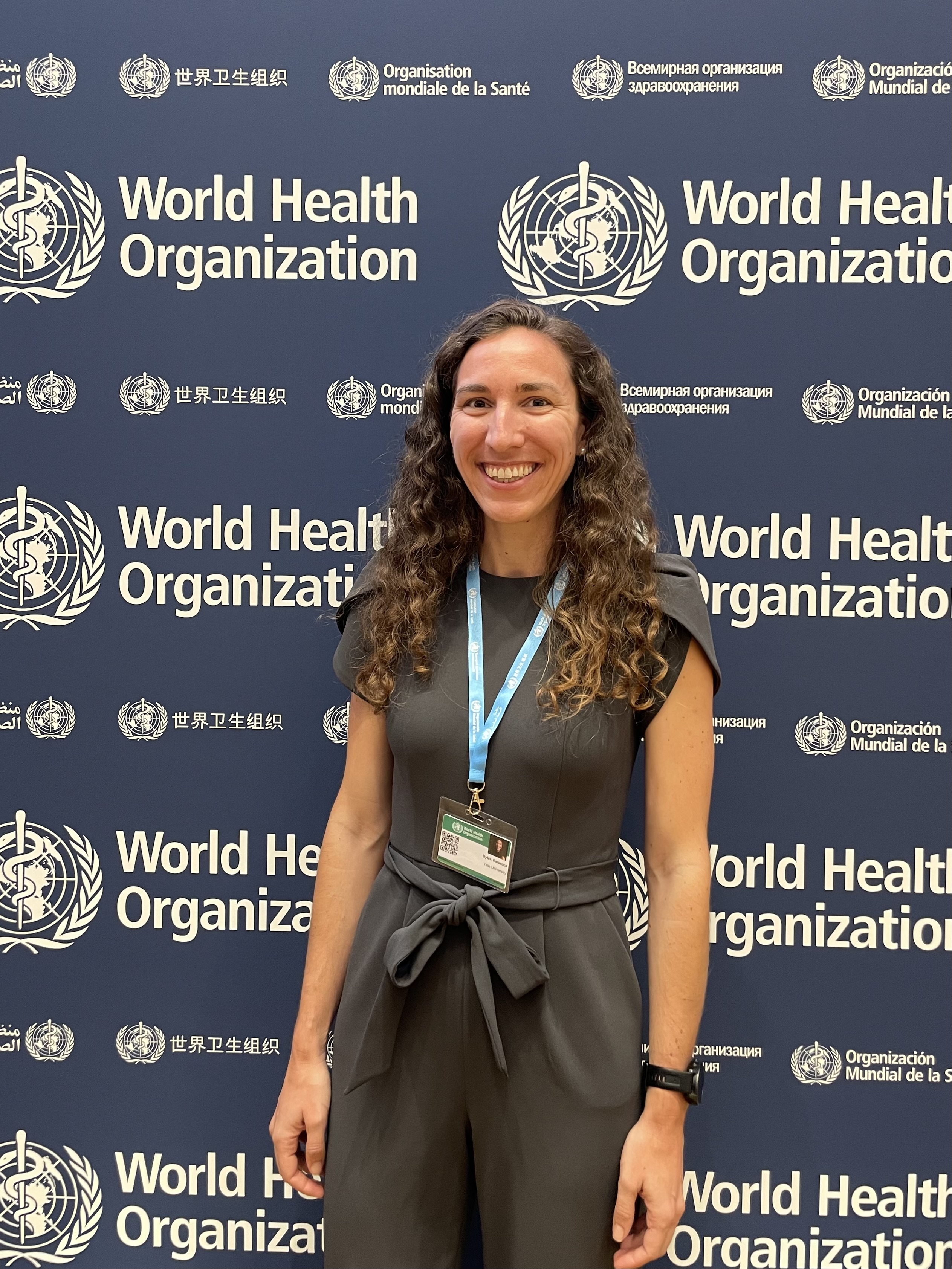
Following GT, Dr. Byler pioneered first-of-its-kind graduate training at Yale University by embedding a Master of Public Health (Epidemiology) at Yale School of Public Health within a Ph.D. in Biomedical Engineering. She also completed Yale graduate certificates in regulatory affairs, global health, and college teaching. Dr. Byler is currently a postdoctoral fellow at the Yale School of Medicine where she leverages 3D biofabrication and biomaterials to “better understand and treat scientifically and socially complex diseases that impact the Global South and its US-based diaspora.” Dr. Byler continues her pursuit of long cuts both within and outside of her research lab including an internship in nanotechnology policy at the United Nations and co-founding Chagas Disease Alliance at Yale (CDAY) with Dr. Bernardo Lombo. CDAY brings together clinicians, researchers, public health professionals, and policymakers to better diagnose and treat Chagas Disease through active data collection in Argentina, Colombia, El Salvador, and Connecticut. Dr. Byler also serves as a member of the World Health Organization’s working group on Skin Neglected Tropical Diseases (NTDs), providing subject expertise on non-animal models of skin for R&D. Dr. Byler remains extensively involved with the John H. Martinson Honors Program and Stamps President's Scholars Program as an alum.
~Author: Sandhya Rajesh, John H. Martinson Honors Program student assistant
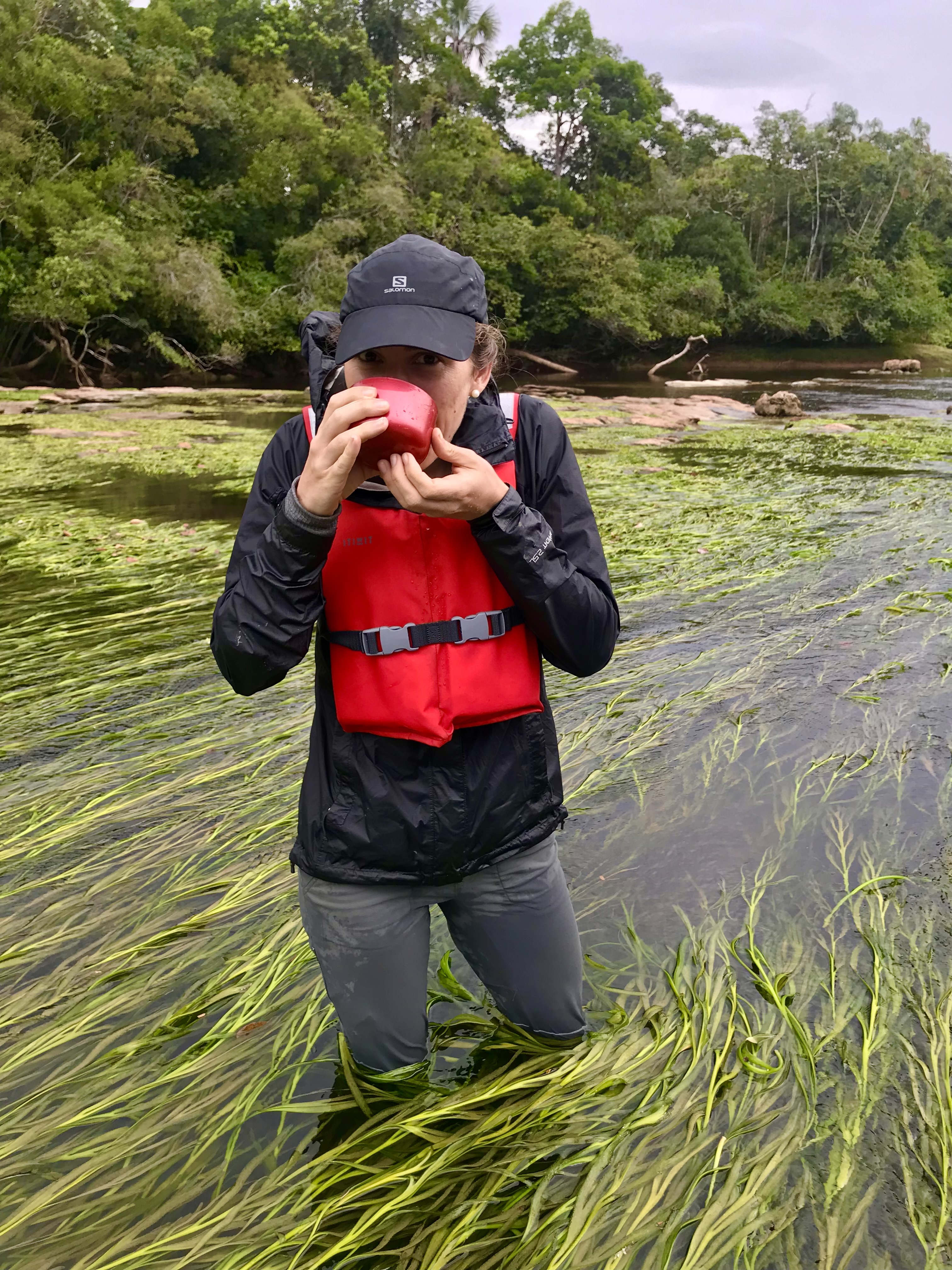
Becky Byler in Colombia
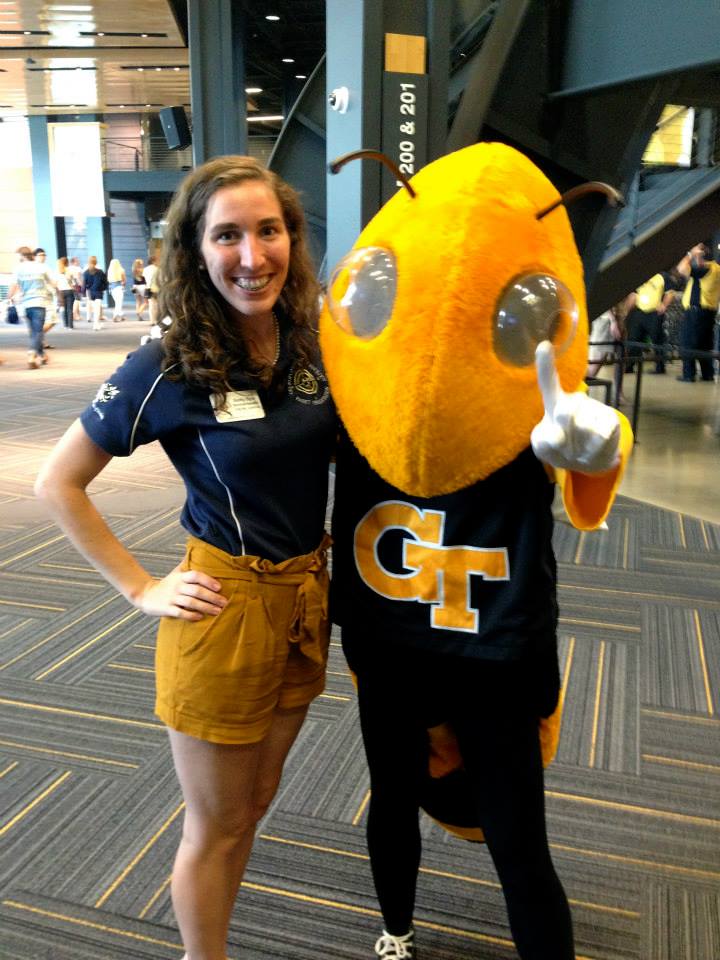
Becky Byler with the Buzz mascot